Wolf Hall by Hilary Mantel
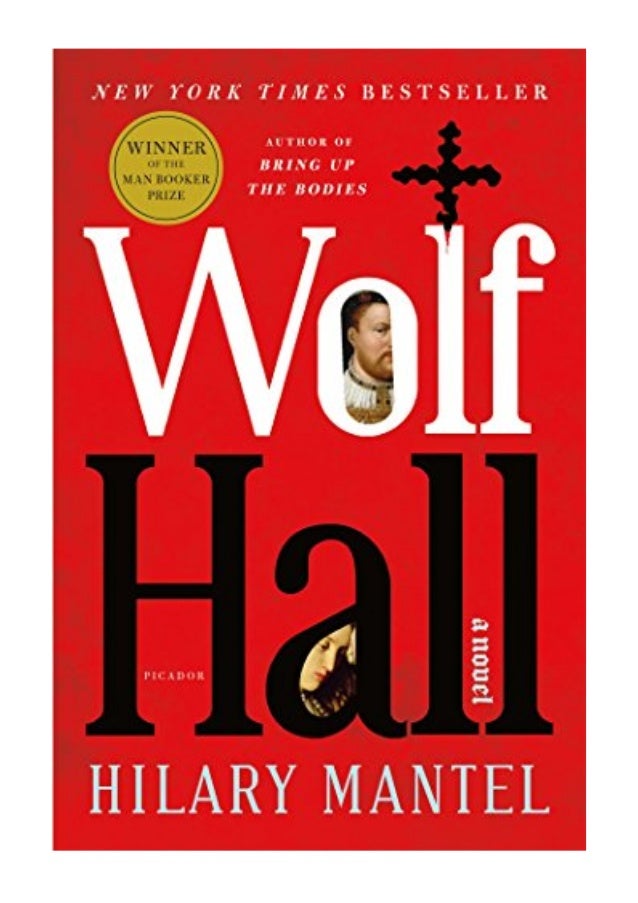 Wolf Hall
By: Hilary Mantel
2009
Henry Holt & Company, 560 pages
Book 1 in the Wolf Hall Series
Synopsis – The novel Wolf Hall is centered on the life of Thomas Cromwell one of the most powerful
proponents of the English Reformation. The book begins with our approximately fifteen-year-old
protagonist receiving a vicious beating from his abusive father. I say
approximately because even Cromwell himself was unsure of his date of birth,
his sister made one up for him to celebrate. Thomas flees his father across the
English Channel. Twenty-seven years later we find Cromwell returned to England
a lawyer and businessman in the employ of Cardinal Thomas Wolsey, Archbishop of
York. What occurred in those twenty-seven years is a mystery, we learn through
conversations and flashbacks that while away he was a soldier for France and became
involved in the textile business.
When King Henry VIII seeks to have his marriage to Queen Catherine
annulled by the Catholic Church he turns to Cardinal Wolsey to find a way to
make it happen. Wolsey makes an effort to do so, but the King and his new love
Anne Boleyn are impatient, leading to the Cardinal falling out of favor with
the King. The King strips Cardinal Wolsey of his title and possessions, he is
disgraced and dies on his way to London for trial for crimes against the Crown.
Normally, the fall from grace of a powerful man would bring ruin to his supporters
as well; however, the English royals recognize Cromwell’s talents. He finds new
sponsorship, leading him to becoming a close trusted advisor of the King.
In his new role, Cromwell is instrumental in the Crown’s
consolidation of power over the Catholic Church in England, and the King’s
union with Anne Boleyn. The book ends with the beheading of Thomas More a
religious zealot who as Lord Chancellor viciously pursued, tortured, and burned
as heretics English Protestants. This included those who smuggled in the first
English translations of the Bible created by William Tyndale. Cromwell found
his actions utterly repugnant, and considered him an enemy.
In this novel Mantel paints a sympathetic view of Cromwell. A man
who as a boy experienced extreme abuse becomes a loving father. He suffers the
horrific loss of his wife and two daughters to the dreaded sweating sickness
leaving only his son who he adores. Cromwell takes care of his wife’s family,
even after her death. He also adopts his sister’s children when she and her
husband die and takes in the poor and abandoned. Yet, his losses make him a
hardened man in the arenas of business, power, and politics leading to a
considerable contrast between his home life and work. This novel is rich with
historical detail, from the apparel worn to the food consumed. The specter of
death is always nearby from the dreaded sweating sickness, fever, or a
political mistake.
Title Characteristics
Genre – Historical Fiction; Literary Fiction.
Pacing –
Leisurely.
Frame / Setting – Predominantly the area of London, England 1500-1535.
Character– Sympathetic;
Complex; Introspective.
Storyline – Intricately Plotted.
Tone/Mood – Atmospheric; Melancholy; Reflective; Sobering.
Style/Language – Compelling; Richly Detailed;
Stylistically Complex; Witty.
Personal Observation – This book is a fascinating read for
those interested in the history of England, in particular the English
Reformation and rule of Henry VIII. The author has a very helpful list of main characters
and their residences at the beginning of the book. The book is a leisurely read,
curious readers will find themselves slowed down by their constant googling of
characters. However, this does not take away from the book but enhances the
reading experience. They will find that the author is a stickler for historical
accuracy.
Read-alikes (Novelist Plus)
1. Mistress of the art of Death by Ariana
Franklin
2. The fifth queen by Ford Madox Ford
3. Tides of war by S.K. Tillyard
4. Thomas Cromwell by Robert Hutchinson
5. Graven with diamonds by Nicola Shulman
Sources
Novelist Plus. (2019). Read-alikes for Wolf Hall.
Saricks, J. G. (2009) The Readers Advisory Guide to Genre
Fiction (2nd Edition). Chicago, IL. American Library Association.
I was completely ready to pass by this book as something I would read with morbid fascination (usually leaves a bad taste) but I heard that Mark Rylance plays Cromwell in the TV adaptation, so I think there must be something in the book that sparks genuine empathy. Would you say that's true for your experience?
ReplyDeleteHi Rivkah! Yes the book definitely sparks empathy for Cromwell. The author paints him as a man who deeply loves his family and takes care of his friends. He also is painted as someone who cares little for the executions of heretics and even his enemies, such as Thomas More. In the book Cromwell attempts to give More every attempt to avoid execution even though he viewed More as a bit of a monster.
DeleteMy knowledge of this time in history is decidedly all taken from the Showtime series The Tudors which features Cromwell quite a bit. I'm intrigued that this novel makes him a sympathetic character. I see that Mantel won The Man Booker prize, as well, which gives me more reason to put this on my list. I did some googling about the books and the PBS series and ran across the following from NYPL: https://www.nypl.org/blog/2015/05/14/wolf-hall-book-list .
ReplyDeleteThanks for the cool link Laura. I have not seen any of the television series based on this book. I choose the book because it sounded interesting. I'm going to need to binge watch the series!:)
DeleteThis is not really in my taste, but I know this is something that my mother would love. I'm going to recommend it to her. Thank you.
ReplyDeleteI appreciate that you included the details that the author is a stickler for historical accuracy. It is great when a fiction book includes that in the story. This is probably a book I would not naturally pick up but the description as well as it being a part of a series made me put it on my "to read" list!
ReplyDeleteI enjoyed your synopsis. History is really a facinating subject, but the personal lives of people are usually left out. We just see it as facts and not understand the workings of human actions. This presents a more sympathetic view of why people do what they do and how they react. This instance helps show the man Cromwell as a real person with all his faults and gives the readers some sense of him as a man and what led to his decisions and actions.
ReplyDeleteI've seen this book and never looked too deep into it because I was intimidated by the size. Your summary however, makes it sound excellent. Fantastic annotation. Full points!
ReplyDelete